Guided Trip

Bruce Peninsula & The Grotto

In Partnership with Parks Canada

Experience the stunning turquoise waters and dramatic limestone cliffs of Bruce Peninsula National Park. Hike the famous Bruce Trail, explore ancient sea caves, and swim in some of the clearest freshwater in the world. A UNESCO World Biosphere Reserve offering breathtaking natural beauty.

Clear-blue waters of Georgian Bay, caves, rock formations and extraordinary scenery make Bruce Peninsula one of Ontario's must-see places.

Four hundred million years ago, this place was underwater. Now it's the most Instagrammed spot in Ontario, and you're about to find out why.

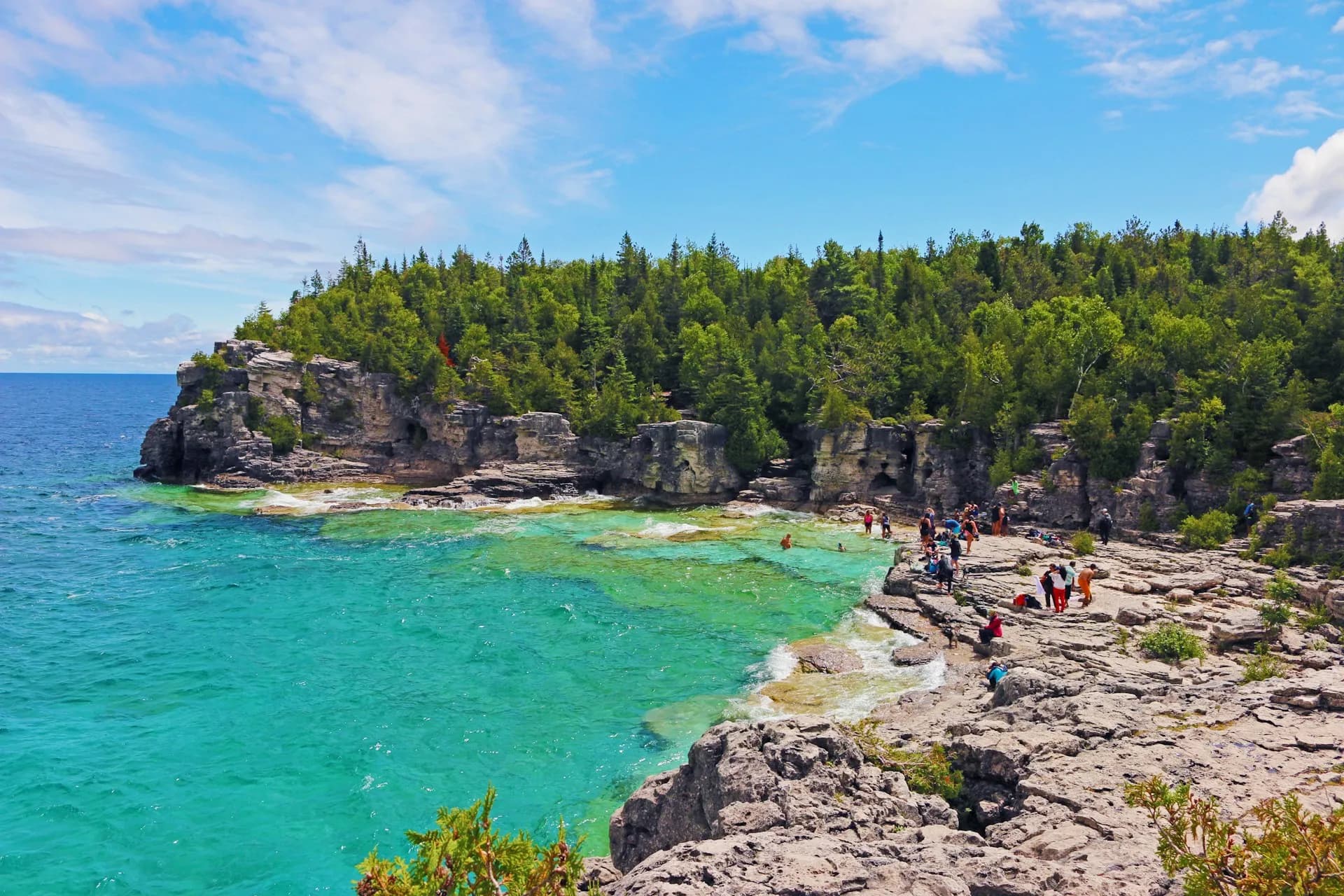
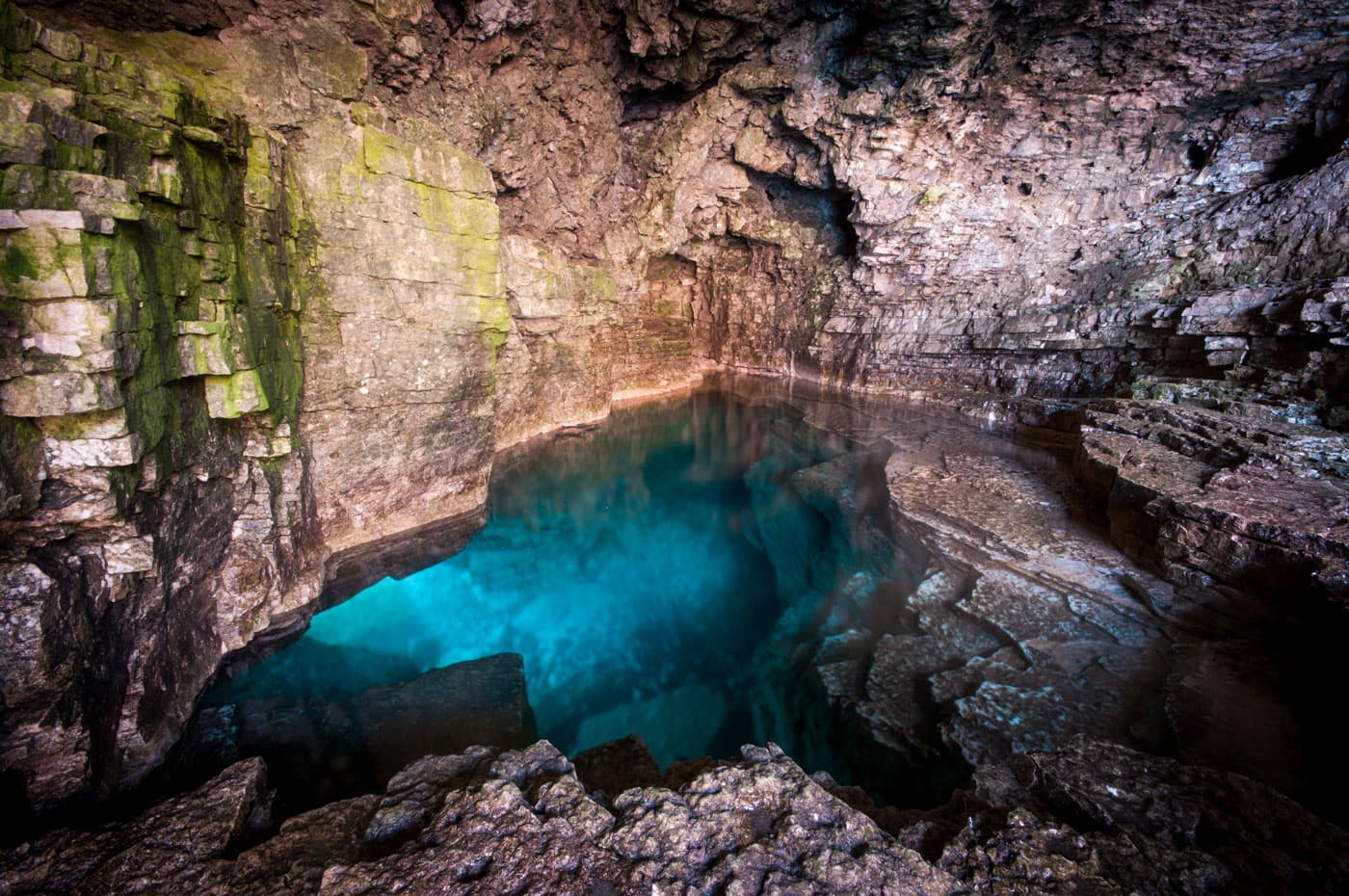
Bruce Peninsula National Park sits at the northern tip of a finger of land jutting into Georgian Bay, about four hours northwest of Toronto. The park is home to the Grotto, a sea cave carved into limestone cliffs by wave action over countless centuries. When sunlight hits the water inside, it glows an almost supernatural turquoise, as if someone airbrushed a tropical destination into central Ontario. Around the Grotto are white boulder beaches, towering dolomite cliffs, caves carved into rock faces, and the kind of views that make you forget you're in Canada (even though you very much are).

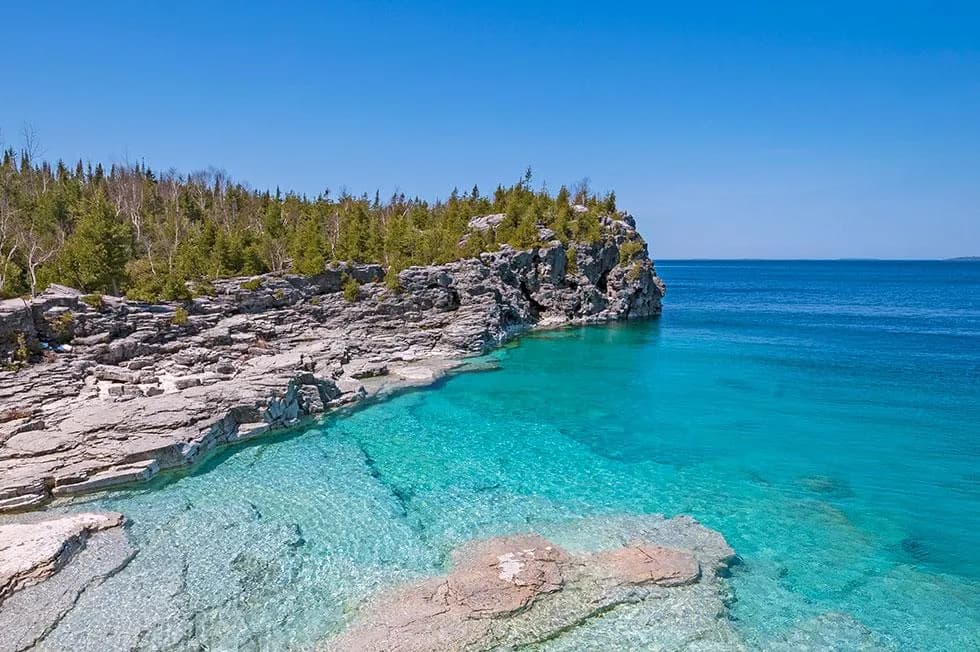
The geology here tells a wild story. Layers of fossilized coral, dolomite, and limestone form these dramatic cliffs. Ancient white cedar trees cling to the clifftops. The water stays frigid year-round because of Georgian Bay's depth and cold currents. On a sunny day, the contrast between the crystalline turquoise water and the pale, sharp rocks feels almost unreal.

Why Most People Haven't Been

Bruce Peninsula is famous, but not famous in a "easy day trip" way. It's four hours by car from Toronto. Parking during peak summer season requires advance reservations because the lot genuinely fills up by mid-morning. Navigation is complicated. You'd spend your whole day driving if you went solo. The experience sits in this awkward middle ground: close enough to Toronto that it draws massive crowds, but far enough that going on your own feels like a commitment.

How Parkbus Solves This

We handle the drive, the reservation, the navigation. You handle showing up with a good pair of hiking boots and a willingness to explore. Four hours on our coach bus means reclining seats, AC, big windows to watch the landscape roll past, and a washroom onboard—basically the opposite of white-knuckling it in traffic. You'll arrive at Cyprus Lake refreshed, with a parking permit secured, a guide who knows the trails, and a group of fellow hikers ready to tackle the day.

Here's What You Can Do

On the ground, your day breaks down like this:

  • The approach hike. You'll follow the Georgian Bay Trail through mixed forest, mostly flat and manageable, with roots and rocks underfoot. The trail widens as you move toward the shoreline. Walking through here feels meditative—dense trees, dappled light, and the knowledge that something extraordinary is minutes away. Figure 30 to 45 minutes depending on pace.
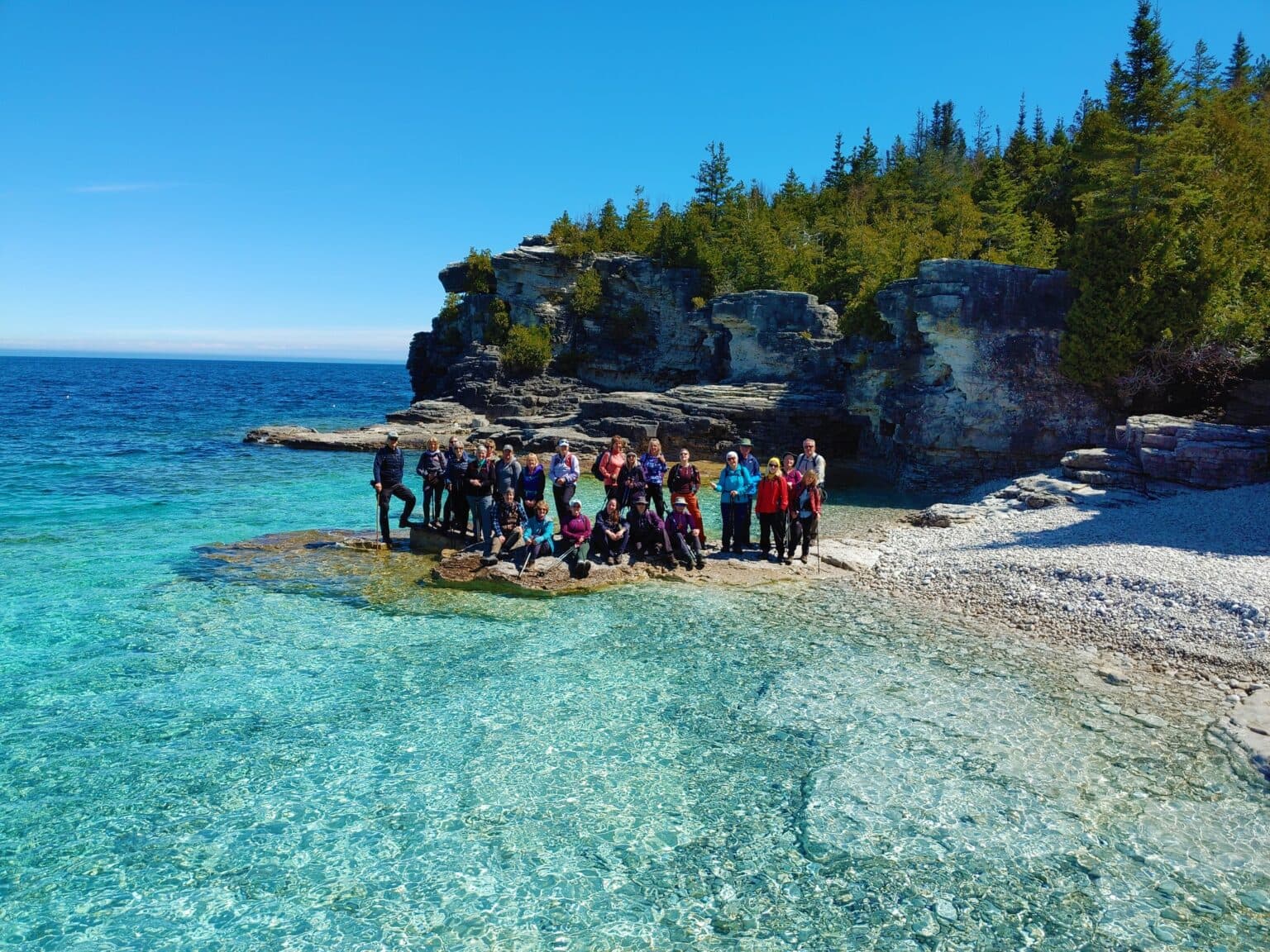
  • The reveal. The trail meets the Bruce Trail right where the forest opens onto the rocky shoreline. Your first glimpse of Indian Head Cove is the limestone cliffs rising straight up, the water below so clear you can see the rocks beneath the surface. The color stops people mid-stride. It's the moment where all the Instagram photos suddenly make sense.
  • The Grotto itself. You'll scramble over white boulders and navigate the rocky shore to reach the sea cave. The interior glows. On sunny days, light refracts through underwater openings in the cliff face beneath the water, creating an ethereal blue glow inside the cave. It's genuinely extraordinary, even surrounded by other hikers (and there will be other hikers).
  • Optional explorations. Depending on your group's energy and hiking pace, your guide can take you along different sections of the Bruce Trail, to the Overhanging Point (a massive bowl-shaped hollow carved into the cliff face), or you can loop back via Marr Lake through quieter woodland. Your guide reads the group and customizes based on fitness levels and interests.
  • Swimming (optional). Indian Head Cove is a favorite among swimmers and SCUBA divers. The water is brutally cold—Georgian Bay cold, not refreshing-summer-lake cold—but the visibility is stunning. Water shoes help with the rocky bottom. A few people always go in. Most people don't. Either is fine.
  • The return. You'll retrace your route back to the parking lot with new legs and the satisfied exhaustion that comes from a solid day of hiking. The bus departs at 4:00 PM.

Tickets:

  • Regular: $100
  • Student: $90
  • Child (12 and under): $50
  • Senior (60+): $90

Pickup Locations
34 Asquith Avenue

Pick up at 34 Asquith Ave, just north of the Yonge and Bloor Subway stop. We recommend getting there 15 minutes early to make sure you have enough time for the bus.

Departure Time
8:30 AM
Return Time
9:30 PM

Cyprus Lake (Grotto)

Bruce Peninsula National Park stop is at the Cyprus Lake Campground, a gateway to the famous Grotto, and many other trails along with the Bruce Trail. Campsite reservations must be made in advance for staying at the park. Please call 519-596-2233 for park info.

Estimated arrival
12:00 Noon
Departure
4:00 PM

What's the bus like for a 4-hour drive?

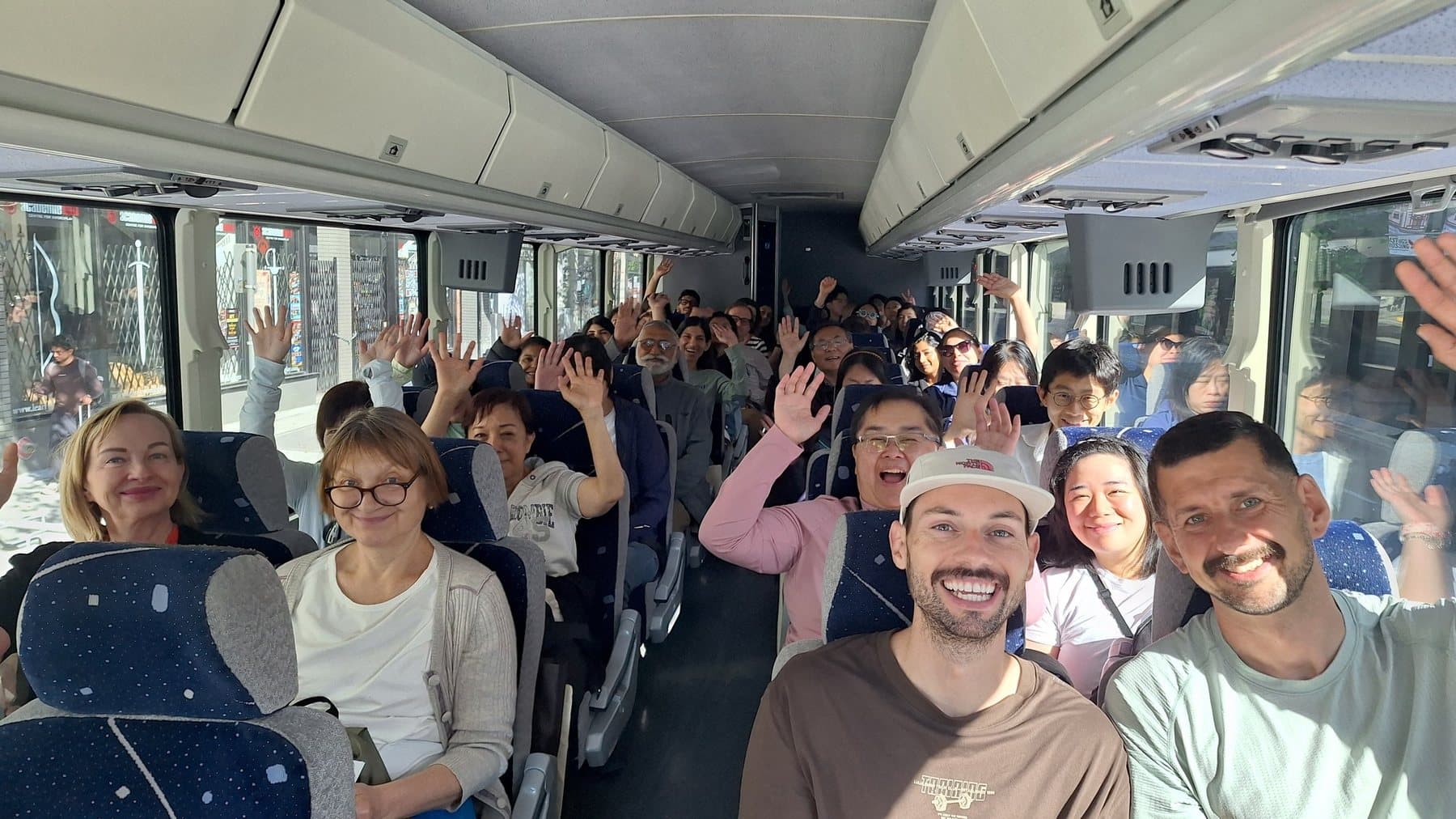
Parkbus uses a full-size coach bus with spacious, reclining seats, air conditioning, and large windows so you can actually see the landscape as you drive. There's plenty of onboard storage for hiking gear, backpacks, and camping equipment. The bus has a washroom onboard. Most people use the drive to relax, chat with other hikers, or catch up on sleep before the day's activities. It's comfortable enough that the journey itself becomes part of the experience rather than something to endure.

Are pets allowed on this route?

Unfortunately, pets, with the exception of service animals, are not allowed on this route.

What is the best way to visit Bruce Peninsula? Can I visit all of the destinations below on one visit?

Parkbus only offers day trips to Bruce Peninsula region, we offer access to its highlights -
Cyprus Lake Campground in Bruce Peninsula National Park, and Lion's Head. Cyprus Lake Campground, offers access to trails in the National Park, including the


Grotto, Overhanging Point, and a number of caves. We drop off at the Head of Trails (see day use guide from Parks Canada HERE). The park has timed entry to reduce traffic in the park, the purpose of this is to reduce capacity and protect the parks natural environment.

Can I camp at Bruce Peninsula?

You can camp at Bruce Peninsula NP by booking through the Parks Canada reservation system. Parkbus does not book campsites for you, they are not included in your booking. However, Parkbus does not offer regular service to Bruce Peninsula, if you are going to camp you are limited to the dates we offer or finding your own city-bound transportation back. You are welcome to get on our bus on any of the dates offered for round-trip transportation.

If I am camping, where do I store my food overnight?

Cyprus Lake Campground (Bruce Peninsula National Park) does have a limited number of bear/raccoon proof boxes available on-site, but they must be reserved in advance by calling 519-596-2233. Parks Canada staff will then deliver the box directly to your campsite. You must store all your food, and any animal attractants (such as garbage, deodorant, etc.) inside those boxes - otherwise they will be confiscated by park rangers.

If you are backpacking in Bruce Peninsula / Lion's Head, bring a rope and be prepared to hang your food, although the National Park may have some food storage options for backcountry campers.

Is there any place to buy food at Cyprus Lake Campground (Bruce Peninsula National Park)?

Unfortunately, there is no place to buy any food at Cyprus Lake Campground. All visitors must arrive self-reliant for the duration of their stay.

Is there any cellphone reception?

Cellphone reception is limited at Cyprus Lake Campground and Bruce Peninsula National Park in general.


About Bruce Peninsula National Park

• Parks Canada protects a network of protected places that represent nationally significant examples of Canada’s natural and cultural heritage.
• Bruce Peninsula National Park was established in 1987 and protects over 140 km2 of land.

Natural History


• The uninterrupted forest and globally rare alvar and cliff edge habitats within the park provide diverse habitats for many species, including several rare or species at risk.
• Bruce Peninsula National Park is part of a Dark Sky Preserve and has some of the darkest skies in North America, which is critical to local ecology and culture.

Cultural History


• Bruce Peninsula National Park is the traditional territory of the Saugeen Ojibway Nation with important archaeological sites dating thousands of years and continues to be an important place for local Indigenous communities.

Be Prepared


• Wear proper footwear for rough terrain and proper clothing for all possible weather conditions.
• Bring enough water and food.
• Be aware of trail distances, time of day, tour boat schedules, and your own abilities and plan accordingly.
• Georgian Bay water is deep and cold with frequent rough water and strong currents. Swimming is not recommended. Visitors are responsible for their own safety.
• For emergencies, call 911. For park violations or non-life threatening incidents, call 519- 596-2702 for Parks Canada Dispatch. Note that cell phone service is not always reliable.

Respect the Park and Other Visitors


• Help keep the park clean by carrying out your garbage and disposing of it in designated receptacles. Business Licence (Basic)
• Stay on the trail to minimize your impact and to avoid contact with Poison Ivy.
• Take-off and landing a drone in a national park is prohibited.
• It is illegal to disturb or collect any plants, animals, rocks, shells or artifacts within the park.
• Do not carve or write on rocks or trees.

No items found.

Book Now